Qal'at al-Bahrain
Ancient Harbour and Capital of Dilmun
Four thousand years of continuous civilization preserved in stone. Explore the archaeological treasures of an ancient trading empire that shaped the known world.
Years of History
Artifacts
Hectares
Why Qal'at al-Bahrain Matters
A UNESCO World Heritage Site preserving 4,000 years of continuous human civilization. This 17.5-hectare artificial tell mound stands as one of the world's most significant archaeological landmarks, revealing the story of Dilmun—the ancient capital that shaped trade and culture across the Arabian Gulf, Mesopotamia, and the Indus Valley.
UNESCO World Heritage Site
Designated in 2005 for outstanding universal value and archaeological significance. Global recognition of Bahrain's heritage preservation.
17.5-Hectare Tell Mound
One of the world's largest artificial settlement mounds, built layer upon layer over millennia. Each stratum tells the story of a different era.
4,000+ Years of Continuous Occupation
Unbroken settlement from Bronze Age through modern times. A living archive of human civilization, trade, and cultural evolution.
Ancient Capital of Dilmun
Center of a powerful ancient civilization that controlled trade routes connecting Mesopotamia, the Indus Valley, and Arabia. A nexus of commerce and culture.
500+ Artifacts Across Five Exhibition Halls
Pottery, seals, tools, and treasures revealing residential life, commerce, governance, and religious practices. Every object is a window into the ancient world.
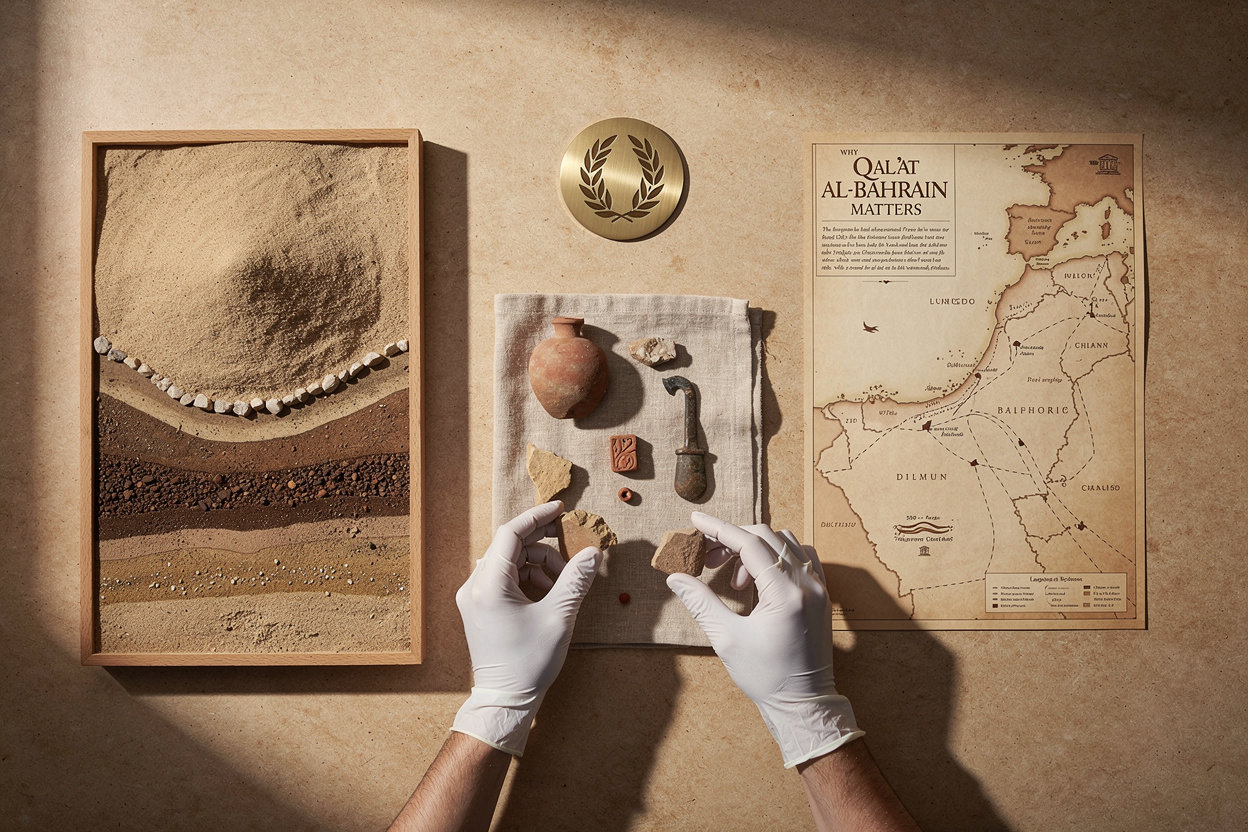
What Makes This Site Globally Significant: Qal'at al-Bahrain is not just a fort—it's a time capsule. The archaeological layers preserve evidence of residential quarters, public buildings, commercial structures, and military installations. The artifacts—from everyday pottery to rare trade seals—document the rise and fall of civilizations, the networks that connected the ancient world, and the daily lives of people who lived here thousands of years ago. This is where history was made, and it's still being discovered.
The Museum & Exhibitions
Step inside five carefully curated exhibition halls that bring 4,000 years of Dilmun civilization to life. With over 500 artifacts spanning residential, commercial, military, and civic life, the museum reveals what daily existence looked like in this ancient capital.
Residential Life
Pottery, tools, and household items that reveal how families lived, cooked, and worked within Dilmun's domestic spaces.
Trade & Commerce
Seals, weights, and imported goods that document Dilmun's role as a crucial trading hub connecting three ancient worlds.
Civic & Military
Architectural remains, fortification evidence, and administrative seals showing how Dilmun's capital was governed and defended.
Religious Practice
Ritual objects, temple artifacts, and ceremonial items that illuminate the spiritual beliefs and practices of ancient Dilmun.
Settlement Layers
Cross-sections of the tell mound showing continuous occupation and cultural transitions across millennia.
What You'll Encounter
Pottery & Ceramics
Vessels for storage, cooking, and ritual use that reveal trade connections and daily subsistence patterns.
Seals & Administrative Records
Cylindrical and stamp seals that document governance, contracts, and bureaucratic systems of ancient Dilmun.
Tools & Craftsmanship
Bronze implements, stone tools, and evidence of skilled trades that sustained the civilization.
Imported Trade Goods
Materials and artifacts from Mesopotamia, the Indus Valley, and Arabia that prove Dilmun's central role in ancient commerce.
Religious Objects
Votive figurines, altar fragments, and temple materials reflecting spiritual and ceremonial life.
Architectural Elements
Stone foundations, brick patterns, and structural remains showing how buildings were designed and constructed.
Typical Visit Duration
Plan for 2–3 hours to experience the full museum and explore the 17.5-hectare site thoughtfully.
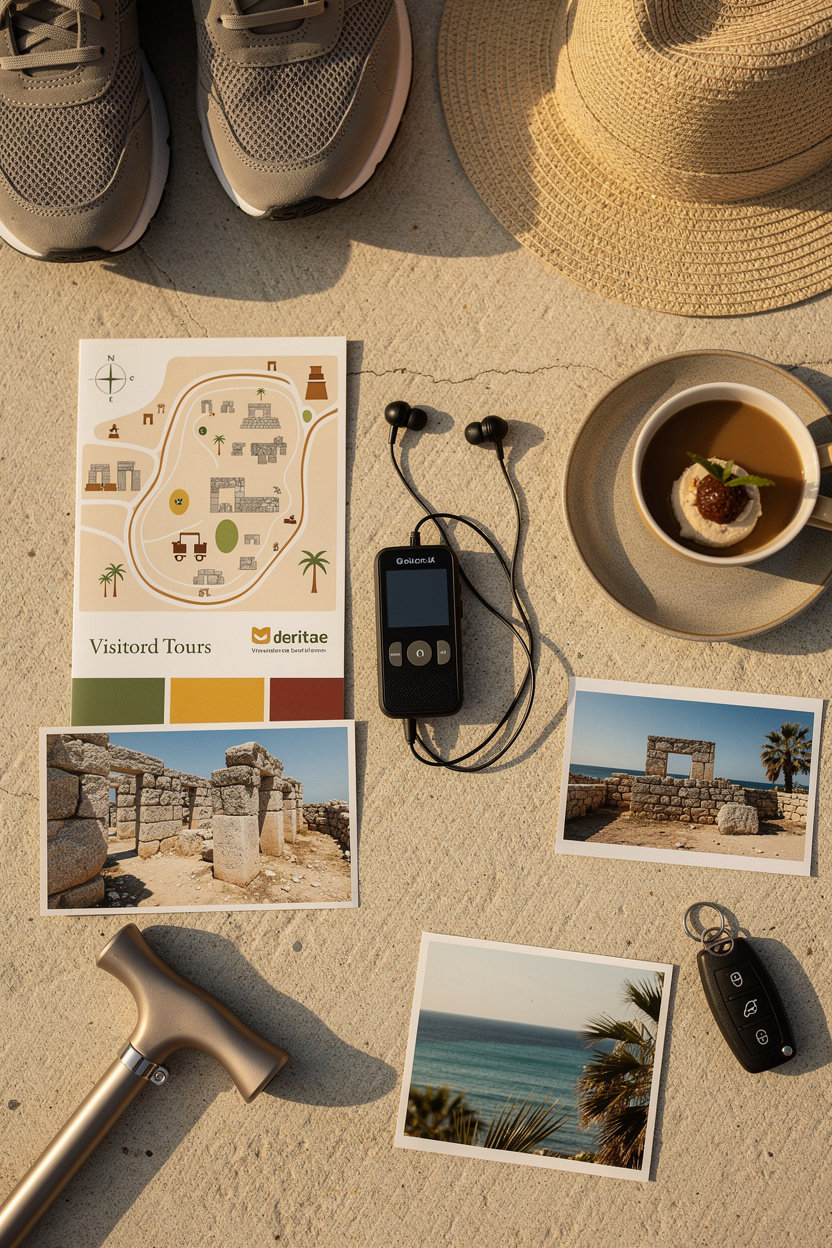
Audio guides allow you to move at your own pace and dive deeper into artifacts of interest.
Audio Guide
Self-guided audio tours available in multiple languages to enhance your understanding of each exhibition hall.
Guided informational tours also offered—call ahead to arrange.
Accessibility
Museum facilities include accessible pathways and viewing areas. Contact us ahead of your visit for specific accessibility needs.
Seaside café with seating provides rest areas throughout your exploration.
Your Museum Journey
Begin at the Entrance Hall
Receive your audio guide and get oriented to the 4,000-year timeline and exhibition layout.
Explore the Five Exhibition Halls
Move through residential, trade, civic, religious, and settlement-layer galleries at your own pace. Use the audio guide to deepen your understanding of key artifacts.
Exit to the Tell Mound
Walk the trails across the 17.5-hectare artificial mound to visualize the layers of history you just learned about. Enjoy coastal views and peaceful surroundings.
Relax at the Seaside Café
Refresh with refreshments and reflect on your journey through Dilmun's ancient world.
Ready to step into 4,000 years of history? Our museum and archaeological site await your discovery.
Experience the Site Your Way
Qal'at al-Bahrain welcomes visitors to explore 17.5 hectares of ancient settlement across a carefully curated experience. Whether you prefer guided discovery or independent exploration, the site offers multiple ways to connect with 4,000 years of history.
Audio-Guided Exploration
Navigate the site at your own pace with our comprehensive audio guide, available in multiple languages. Discover artifact details, architectural context, and historical narratives as you move through the museum and across the mound.
Guided Informational Tours
Join an expert-led tour and gain deeper insights into the excavations, settlement layers, and significance of Dilmun's capital. Tours can be arranged for individuals or groups — contact us to book.
Seaside Café & Refreshments
Rest and reflect at our café overlooking the coast and palm groves. Enjoy refreshments while taking in views of the Arabian Gulf and the surrounding landscape—the perfect pause in your journey through history.
Walking Trails & Exploration
Marked pathways guide you across the entire site, from the museum through residential quarters and up the mound itself. Well-maintained trails make exploration accessible, with plenty of opportunities to stop, photograph, and absorb the landscape.
Accessibility & Mobility
We're committed to welcoming all visitors. The museum and lower sections of the site are accessible, with accommodations available for mobility challenges. Contact us to discuss your specific needs.
Suggested Visit Flow
- 1. Start at the Museum: Explore the five exhibition halls and 500+ artifacts to understand daily life, trade, and governance across 4,000 years.
- 2. Ascend the Mound: Walk the trails up the artificial tell, observing settlement layers and enjoying expanding coastal views.
- 3. Explore Structures: Visit excavated residential, commercial, and defensive areas scattered across the site.
- 4. Rest & Reflect: Finish at the seaside café with views and refreshments.
Typical visit duration: 2–3 hours for a comprehensive experience; 1–1.5 hours for a focused museum visit.
Photography Welcome: Capture the mound's profile against the sea, artifact details in the museum, and the palm groves framing the site. Early morning and late afternoon light are particularly beautiful for photography.